




Beyond Campaign Gifts: Gombe Women’s Groups Push for Smarter Voting
By Auwal Ahmad
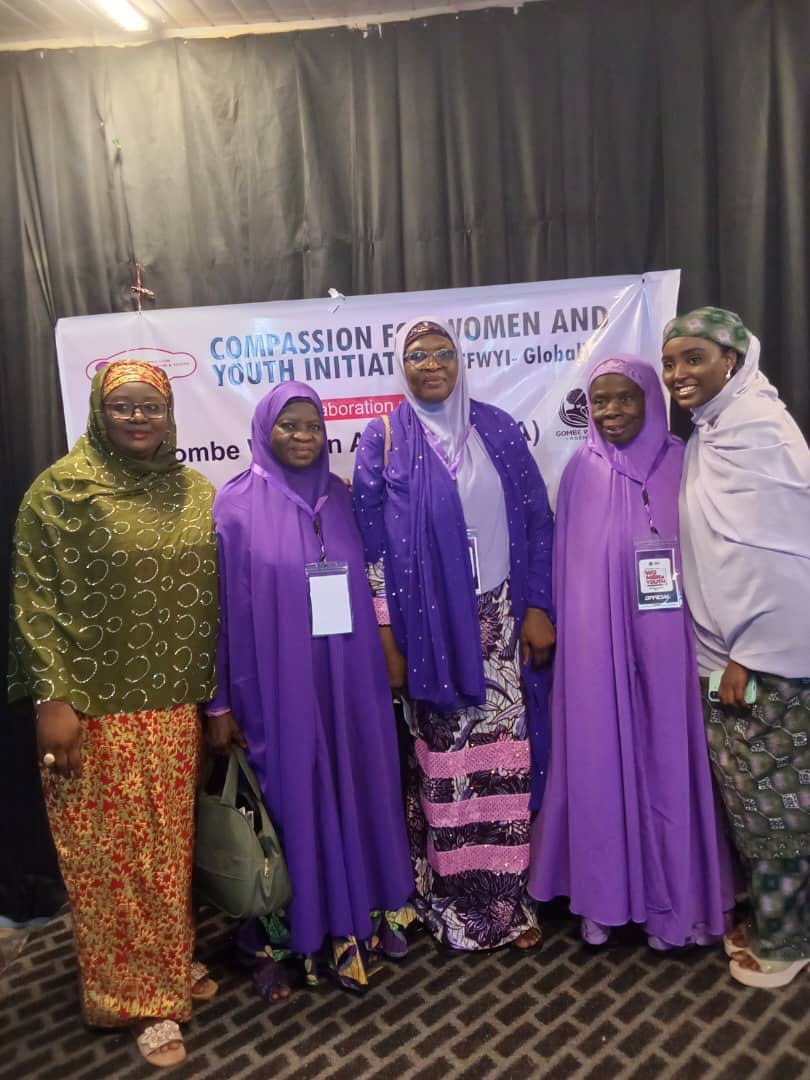
Two women-focused civil society organisations in Gombe State have launched a pre-election sensitisation programme to encourage women and youths to look beyond campaign gifts and make independent, informed choices at the ballot box.
The initiative, organised by Compassion for Women Initiative and Gombe Women Agenda, is designed to address concerns over vote buying and political manipulation, particularly the vulnerability of economically disadvantaged women to cash, food, clothing and other incentives offered during election campaigns.
The organisations said the programme is also aimed at helping voters understand the long-term consequences of their choices and assess political candidates based on their ability to deliver meaningful development.
Speaking at the sensitisation programme, the Chairman of the Gombe Civil Society Network (GONET) and Convener of Gombe Women Agenda, Amb. Ibrahim Yusuf, represented by Auwal Ahmad Umar, said the initiative was developed in response to concerns surrounding preparations for the forthcoming elections.
Yusuf said poverty and hunger could make some women more susceptible to inducements from politicians seeking electoral support.
He listed cash, food, clothing and other material items among the common forms of incentives used to influence voters during election periods.
He urged women to consider the quality of leadership and the ability of candidates to deliver democratic dividends rather than allowing temporary campaign benefits to determine their choices.
“Any person giving you money to vote for him will not give you the dividends of democracy, which include security, quality education, healthcare and other development,” he said.
The State Coordinator of Compassion for Women and Youth Initiative, Hajiya Fatima Abdullahi, said the programme was necessary because women and youths make up a significant proportion of the electorate and should be equipped to make political decisions without undue influence.
She said economic hardship was one of the major factors that could make voters vulnerable to politicians offering immediate assistance during campaigns.
“We looked at the fact that the elections are coming and the preparations, as we know, for campaigns. The usual thing we are afraid of is the giveaways to the masses,” she said.
According to Abdullahi, a woman struggling to provide food for her family could understandably see money, food, clothing or other items offered by politicians as an opportunity to meet an immediate need.
She explained that the organisation’s approach was therefore not to condemn women who accept such items, but to ensure that accepting them does not amount to surrendering their voting rights.
“We cannot tell them not to collect. What if we make the mistake of telling them not to collect? We lose them. So, what we tell them is: collect, but vote rightly,” she said.
Abdullahi stressed that the focus of the sensitisation was to ensure that women retain the freedom to decide who deserves their votes after considering the candidates and their records.
Also speaking, the Assistant Secretary of Gombe Women Agenda, Fatima Chadi, cautioned women against allowing politicians or influential individuals to determine their choices through intimidation, religious sentiments or threats.
She particularly warned against attempts to compel voters to swear allegiance to a particular candidate in exchange for money or other benefits.
Chadi said the programme would also provide a support system where vulnerable women could discuss their challenges, receive guidance and seek assistance.
She described the initiative as a “stepping stone”, noting that changing voting behaviour and addressing the socio-economic challenges confronting women would require sustained engagement beyond a single election sensitisation exercise.
The organisers said their broader objective was to promote a more informed electorate in Gombe State, with women and youths encouraged to evaluate candidates on competence, integrity, policies and their capacity to provide security, education, healthcare and other essential democratic dividends.
