




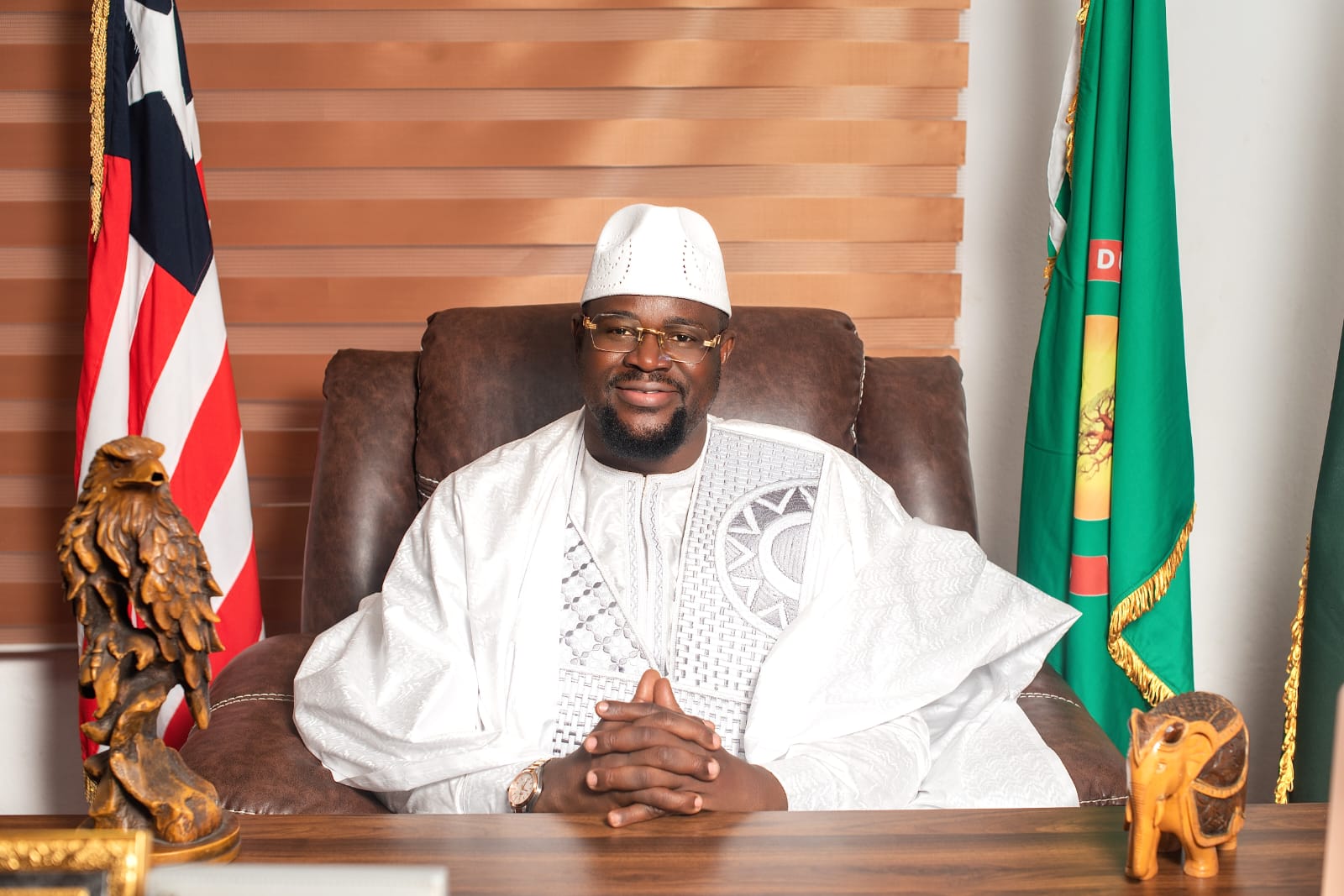
Africa Must ‘Dangotise’ to Break free from Dependency – APM President
By Auwal Ahmad
The President of the African Peoples’ Movement (APM), Sheikh Al-moustapha Kouyateh, has challenged African leaders to abandon an economic model built around the export of raw materials and dependence on imported finished products, declaring that the continent must industrialise or risk remaining trapped in economic dependency.
Kouyateh said Africa’s path to prosperity lies in what he described as “Dangotization” — a development philosophy centred on production, industrialisation, value addition, technology and meaningful African ownership of businesses and industries.
He said the continent could no longer afford to export its natural resources cheaply and later spend far more to import finished products made from those same resources.
“We reject dependency. We reject the idea that Africa must only sell raw materials and buy back finished goods,” Kouyateh said.
According to him, Dangotization is not simply about expanding industries but about changing the way African economies create and retain wealth.
He said African countries must develop the capacity to process agricultural products, minerals and other natural resources locally, while investing in manufacturing, engineering, technology and innovation.
Kouyateh said stronger regional cooperation would be crucial to achieving the vision, arguing that African countries must remove barriers that limit trade and economic integration across the continent.
He called for investment in roads, railways, ports, energy infrastructure and trade networks that would connect African markets and make it easier for goods and services to move across borders.
“We will connect regions through trade, infrastructure, and shared standards — so Africa produces for Africa,” he said.
The APM president also identified skills development and entrepreneurship as key pillars of economic transformation.
He said Africa’s large youthful population could become a major economic asset if governments invested adequately in education, technical skills, innovation and opportunities for young entrepreneurs.
Kouyateh said Africa’s economic transformation should not merely attract foreign investment while leaving Africans at the bottom of the ownership structure.
He argued that Africans must have meaningful stakes in the businesses, industries and technologies driving economic growth.
“We will ensure African ownership and fair participation, so development benefits those who live here,” he said.
He maintained that economic development should translate into better livelihoods, more employment opportunities and stronger local enterprises rather than wealth being concentrated in the hands of a limited number of people.
The APM president also called for an economic model that would deliberately include persons with disabilities and other vulnerable groups.
He said no economic transformation could be considered successful if significant sections of society were left behind.
“In that prosperity, there will be no exclusion: development must be accessible, disability-inclusive, and designed so disabled people can participate fully,” he said.
Kouyateh said persons with disabilities should have opportunities to participate in education, employment, entrepreneurship and other productive activities.
At the heart of Kouyateh’s Dangotization concept is the argument that Africa must retain more of the economic value generated from its natural resources.
Rather than exporting agricultural produce, minerals and other commodities in largely unprocessed forms, he said African countries should build the industrial capacity required to turn those resources into finished and semi-finished products.
Such a shift, he argued, could create jobs, strengthen local businesses, increase government revenues and reduce dependence on imported goods.
Kouyateh said the objective should be to build an Africa capable of producing for its own markets while developing globally competitive industries.
He said the continent possesses the resources, human capital and market needed to become a major global economic force, but must first overcome the structural dependence that has limited its development.
The APM president reiterated that Africa must stop seeing itself merely as a supplier of raw materials and become a continent of producers, manufacturers and innovators.
