



Gombe Takes Delivery of N1bn Commodities to Tackle Malnutrition
By Auwal Abdullah
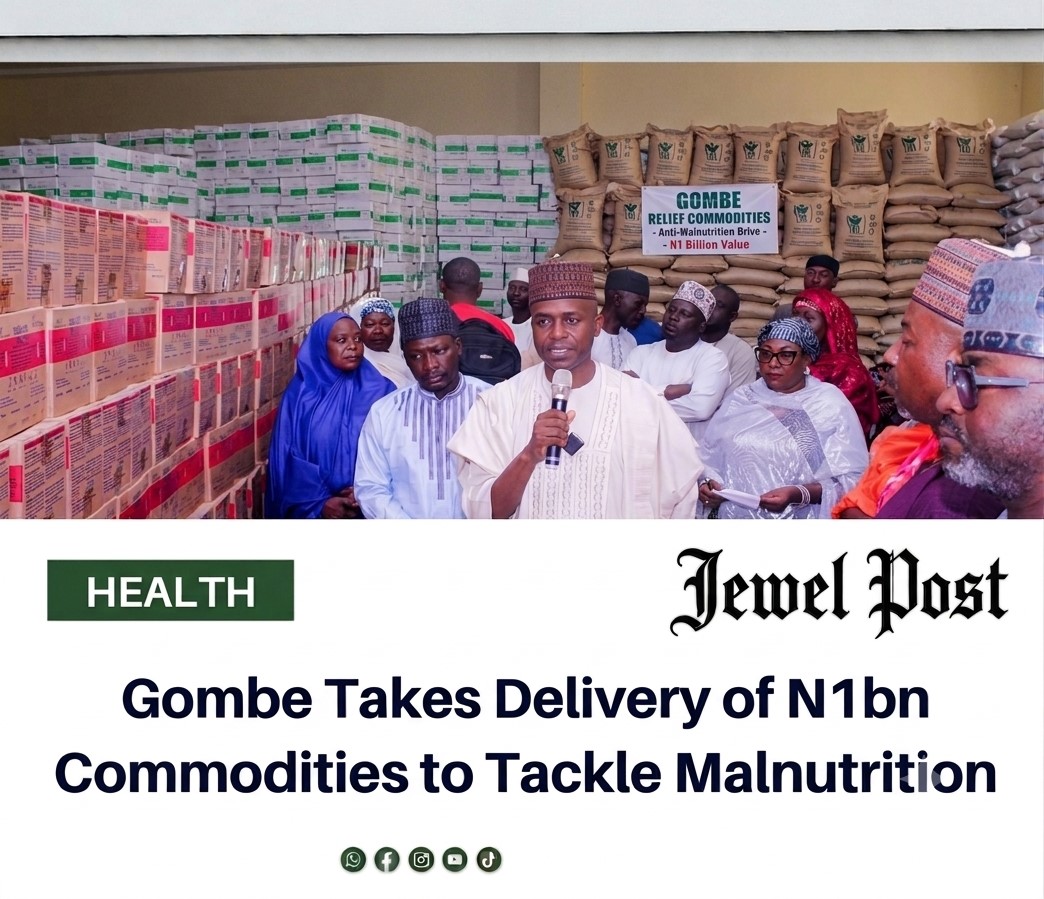
The Gombe State Government has taken delivery of nutrition commodities worth N1 billion aimed at combating acute malnutrition among children across the state.
The program, done with UNICEF, includes Ready-to-Use Therapeutic Food (RUTF) and Small Quantity Lipid-based Nutrient Supplements (SQLNS) to help prevent and treat malnutrition.
Speaking during an inspection of the commodities, the state nutrition officer, pharmacist Ahmed Hashidu, said the state received a total of 11,517 cartons of nutrition supplies between March and April this year.
According to him, the commodities were delivered in seven truckloads and have been stored in designated warehouses pending distribution.
“We received a total of 11,517 cartons. Of these, 9,877 cartons are stored in this warehouse, while another 1,640 cartons are kept in a separate facility. All the commodities are in good condition,” he said.
Hashidu explained that the commodities were procured through a matching-fund arrangement between the state government and UNICEF, with each party contributing N500 million, bringing the total investment to N1 billion.
Also speaking, UNICEF’s Vaccine Security and Logistics Consultant in the Bauchi Field Office, Pharmacist AbuBakar Mohammed, said the intervention was informed by data indicating the presence of malnourished children in need of nutritional support.
He noted that UNICEF remains committed to supporting efforts aimed at improving child nutrition and reducing the burden of malnutrition in the state.
Meanwhile, the executive secretary of the Primary Health Care Development Agency, Abdulrahaman Shuaibu, assured that distribution of the commodities would commence next week and would be based on the prevalence of malnutrition across local government areas.
Priority areas identified for the intervention include Nafada, Dukku, Kwami, Kaltungo, Gombe, Akko, Yamaltu/Deba and Funakaye Local Government Areas (LGAs).
I added that the state government has institutionalised nutrition funding through a dedicated budget line and is also promoting locally produced nutritional supplements as part of efforts to sustain progress in the fight against malnutrition.
To prevent diversion and misuse of the commodities, Shuaibu disclosed that the government has established a multi-sectoral monitoring committee involving relevant ministries, security agencies, and traditional leaders, as well as public sensitisation campaigns across communities.
He explained that while the RUTF supplies are intended for the treatment of acute malnutrition, the SQLNS products will be used to prevent malnutrition among vulnerable children across the state.
